What’s a fear you’ve overcome — and how did you do it?
I grew up with the fear of getting it wrong. I always felt that nothing was ever good enough for my mother, and that I was constantly being criticised when, in fact, she was probably only trying to do what was best for me, encouraging me to be the person she knew I could be.
Let’s be honest, most of us have had it drummed into us that “good enough isn’t” (good enough).
Then I learned the Pareto Principle. 80% of the benefit results from 20% of the effort. And I suddenly realised that good enough really is good enough. We aren’t perfect. We are going to make mistakes. There are very few, if any, areas in life where perfection is essential. So why waste 80% of our effort trying to correct that last 20% which no one except the most critical perfectionist (which is often ourselves) will notice, anyway.
Triumph and Disaster are imposters. They may engender strong emotions at the time, but those emotion fade and are replaced by the next big issue facing us in life.
If you can meet with Triumph and Disaster And treat those two imposters just the same
(If – Rudyard Kipling)
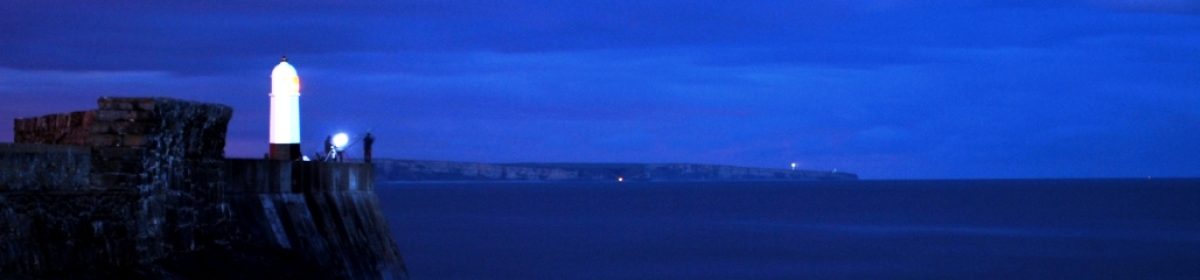
Porthcawl Beach
Rudyard Kipling’s poem, If, is a study in contrasts, considering many of the opposites that we encounter in daily life. He describes being able to do what others cannot; of handling situations with equanimity; of dealing with life in a balanced way.
Yet his comment, above, on the opposites, Triumph and Disaster, seems to add another dimension. Most versions of the poem capitalise the words as proper nouns, almost as if they are people, or even gods. And, in truth, many people see triumph as an idol to be worshipped at all costs.
“I just wish they would say, ‘Thank you,’ now and then.”
Swathes of Glory
As a care-giver I am aware that one of the most common complaints that fellow care-givers utter is, “I just wish they would say, ‘Thank you,’ now and then.”
It’s true. Although most people who require care really appreciate the help that they receive, many are in too much pain, either physically, mentally, spiritually, or emotionally, to think about showing gratitude. It isn’t deliberate. They just don’t know how to say it in the circumstances.
For example, one young girl told her grandfather, who is also her guardian, that she wished he was dead, mainly because he would not allow her to cause injury to her brother. The grandfather merely said, “Yes. I know. I can imagine you feel like that.”
Deep down inside, however, he wondered whether he was cut out for this role, or should he simply give up and send the children into foster care.
Next morning, there was a gentle knock on his bedroom door and his granddaughter walked in with a home-made card with a little drawing and the words, “I love you,” hand-written on the front. Inside was another message saying that she loved him, among other things.
Notable by its absence, though, was the phrase, “Thank you.” She just couldn’t bring herself to say it.
The Cosmos Thanks You
Some time ago, I was doing some work on Compassion Fatigue; mainly from the perspective of how to avoid it. As synchronicity would have it, though, I also went for an eye test that week.
After my test, I sat down with the “Frames Specialist” (read, sales woman) to choose new glasses. She commented that my choice of varifocals was useful for work.
I explained that I don’t work in the conventional sense. I am, for want of an easier explanation, a foster carer.
She immediately pounced on it and this random total stranger told me, “You’re doing a fantastic job. Well done.”
And I realised that it was not the first time something like that had happened.
A few years ago, my mother and I had taken the children to a café for lunch, and my granddaughter had been playing up. My mother, being old school, could not understand why I was dealing with the child in such a kindly manner. To be honest, the behaviour was getting to me, too!
Yet, as we left, a random total stranger sitting at a nearby table put his hand on my arm to stop me. He looked me in the eye and said, “You’re doing a fantastic job. Well done.”
Thinking about all these experiences it made me realise how often such things happen and that, even though we may not receive the expected gratitude from those we are charged to care for, we do receive gratitude. It’s as if the cosmos appreciates the work that we are doing to care for these poor souls who cannot care for themselves; who might otherwise be left to fend for themselves, maybe on the street.
So, next time the person you care for shows a lack of gratitude, think about all the times someone else has said it. And wonder whether, since that person doesn’t really know you, is it, perhaps, that the person was moved to say something, just when you needed it most?
Failure is successfully finding a way that does not work, and the only thing we can really control is the way we respond.
Disappointments happen; and we need to get used to it. We are going to have bad times as well as good; and the only thing we can really control is the way we respond.
When we fall, there is a temptation to think that we are failures. But that is not necessarily true. It has often been said that failure is successfully finding a way that does not work. That’s a good way to look at it. Psychologists call it reframing. It’s a matter of looking at things from a different perspective; changing the way we think about things; viewing failure as an opportunity to learn. It’s a matter of seeing the potential in each situation. As was once said, when you’re at the bottom, the only way is up.


 Greenacre 9