Here It Comes

How quickly things change. It may be the weather, or it may be our circumstances. But we must be prepared for change.

Storm Clouds

How quickly things change.

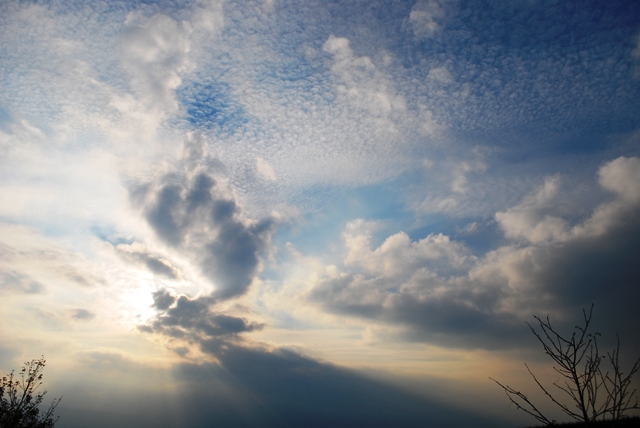
Blue sky swamped by stormy clouds.

Here it comes, again.


How quickly things change. It may be the weather, or it may be our circumstances. But we must be prepared for change.

Continue reading “Here It Comes”

Good Enough Really Is

What’s a fear you’ve overcome — and how did you do it?

I grew up with the fear of getting it wrong. I always felt that nothing was ever good enough for my mother, and that I was constantly being criticised when, in fact, she was probably only trying to do what was best for me, encouraging me to be the person she knew I could be.

Let’s be honest, most of us have had it drummed into us that “good enough isn’t” (good enough).

Then I learned the Pareto Principle. 80% of the benefit results from 20% of the effort. And I suddenly realised that good enough really is good enough. We aren’t perfect. We are going to make mistakes. There are very few, if any, areas in life where perfection is essential. So why waste 80% of our effort trying to correct that last 20% which no one except the most critical perfectionist (which is often ourselves) will notice, anyway.

The Imposters

Triumph and Disaster are imposters. They may engender strong emotions at the time, but those emotion fade and are replaced by the next big issue facing us in life.

If you can meet with Triumph and Disaster
And treat those two imposters just the same

(If – Rudyard Kipling)

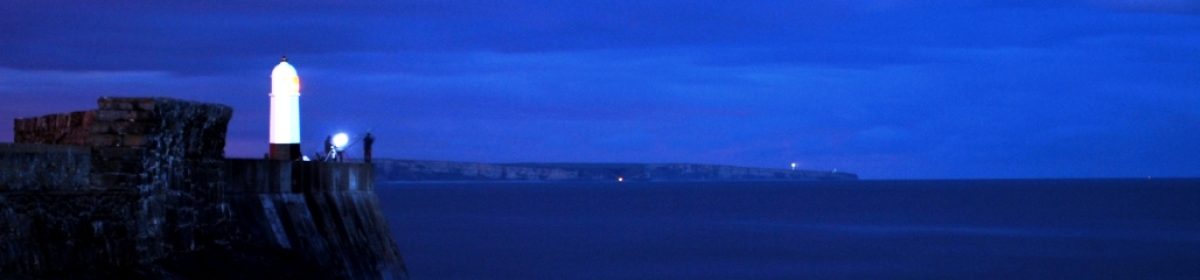
Porthcawl Beach

Rudyard Kipling’s poem, If, is a study in contrasts, considering many of the opposites that we encounter in daily life. He describes being able to do what others cannot; of handling situations with equanimity; of dealing with life in a balanced way.

Yet his comment, above, on the opposites, Triumph and Disaster, seems to add another dimension. Most versions of the poem capitalise the words as proper nouns, almost as if they are people, or even gods. And, in truth, many people see triumph as an idol to be worshipped at all costs.

Continue reading “The Imposters”

Resolution–The First Day of the Rest of Your Life

What do we mean by a resolution? It can mean any of several things. But in this context, we analyse a bad habit and determine to change, in the future.

Sunrise

Many people decide to make New Year’s Resolutions on 1st January, every year. Sadly, for most people, their resolve does not last as long as it took to make the resolution.

Yet, what do we mean by a resolution? It can mean any of several things. But in this context, we analyse a bad habit and determine to change, in the future.

I did see a humorous take on this, recently. I don’t have the reference, at the moment. If I find it I will share it. It went along the lines of: “My wife told me that this year I should make a resolution that I can achieve. So I resolve to be the fattest, laziest couch potato that I can be.” Sadly, this is the reality for too many people.

Why Resolve Now?

People see a new year as a new beginning. Yet, is it, really? Who decided that January 1st is the first day of the new year? The Chinese new year doesn’t start on January 1st. The Indian sub-continent celebrates the new year at various dates, depending on where you live and which religion you follow, but is generally March 31st for many. For Muslims, the new year starts in October or November.

If you are in business, you may have a number of new year dates. For personal tax purposes, the new year starts on 6th April, every year. For certain aspects of limited company tax matters, it is April 1st. For your business, it could be any time. I have known clients who start their financial year on 1st April, 6th April, 1st January, the first of any month that suits them, and one client whose financial year started on 2nd October. Why? Because that was the date he started his business, all those years ago, and he was sentimental about it.

A Symbolic New Start

The point is that what we are looking at is merely a symbolic day. Let’s be honest, changing habits takes longer than the time it takes to sleep from one day to the next. So what we are really saying is that this is going to be the first day of our new lives.

However, why wait until January 1st? We can start a new life at any time. I’m sure you have heard the old adage that “this is the first day of the rest of your life.” That is true, every day. Every morning that we awaken, life starts over. We may have to deal with the legacy of yesterday’s events. But we don’t have to repeat them.

So make this your determination: That each day, from now on, as soon as you identify something in your life that you want to change, you will not wait until January 1st to change it. You will start immediately.

After all, if your roof started leaking on January 2nd, would you wait another 364 days before fixing it? If your business was struggling for sales, mid-year, would you another six months before acting? It’s the same with personal habits. Why wait until next year before changing?

Do it now, whenever now happens to be. Otherwise, it may never happen.

Lost

Lost is an attempt at a dialogue. It’s the dialogue we need to have with ourselves – regularly.

“I’m lost.”

“No, you’re not.”

“I am.”

“How can you say that?”

“Because I don’t know where I am.”

“You’re here!”

“But where’s here?”

“Why does it matter? Where do you want to be?”

“That’s the point. I don’t know where here is; and I don’t know where I . . . Well, actually, I do know where I want to be, and I’m not there.”

“How do you know?”

“I don’t. That’s what’s so confusing. I’m not sure I can really explain it.

“You see, I look around and I’m in a jungle between lots of trees with a dense fog, all around. There’s no clear path out. I can’t even work out how I got here. Yet I’m also not sure that I don’t want to be here. I mean, it could be said that I’m here by choice, couldn’t it. So, if I’m here by choice, I probably want to be here. But why would I want to be here?”

“Why do you think you want to be here?”

“I don’t know. Am I hiding from something? Or someone? Who? I feel like I’m hiding from . . . myself! Why would I do that? Am I trying to deceive myself? Why? There’s something I need to do and . . . and I’m afraid to do it; somewhere I have to go, but I’m afraid to go there.”

“Where do you have to go? And what do you have to do?”

“I have no idea.

“Well, actually, that’s not quite true. I have to go inside and search.”

“Inside? Inside what?”

“Not what? Who? I have to go inside myself. And that’s scary.”

“Not many people can do that.”

“Tell me something I don’t know. Too many people go off to ‘find themselves’ and never come back. No wonder it’s scary.

“Yet, really, I know where I am. I’m here; wherever here is. I’m not really lost. I know where I am; I’m here. I just don’t know where here is.”

“If you did know where ‘here’ is, what would you do with that information? After all, you said there are no visible paths. So it would not matter which direction you go in.”

“True. But at least . . . at least if I’m moving, it would be easier to turn.”

“Interesting.”

“And I’ll never find my way unless I can see where I’m headed for.

“I suppose the real question is where I want to be headed for. If I’m searching for myself, and I know I’m here, then haven’t I already found myself? Haven’t I already reached my destination?

“No. That’s not quite true. The idea of a destination suggests that the journey will end. Yet the journey never ends, does it. Life goes on and the journey doesn’t end. After all, once we reach our destination we look around for somewhere else to go. The journey never ends. And, since I know that I’m here, this is just a stopping off point on my journey.

“So why can I not see which way to go? Because I have no clear direction? Where do I want to be? No. Why do I want to be here?”

“Good question. Why do you want to be here?”

“Because I need a rest. I need some time without the demands of other people tugging at my resources. Yet I also don’t want to ignore the needs of those who matter to me. That’s why I’m afraid to search for myself – I don’t want to lose those I care about.”

“And yet you know where you are.”

“So I don’t need to search! I’m here.

“And the mist is clearing. Mist? Fog? What’s the difference? It’s clearing. There is always a path between the trees. It may not be a well-worn path, but it’s still a path. It’s a path I have to make for myself. It’s my life; my journey; my path.”

“So what does that mean?”

“It means I know where I am. And I know where I’m going.

“I’m here, and I’m going to keep going. I’m simply going to walk between two trees and keep going.

“That’s strange.”

“What is?”

“Where did that path come from? Did I just make that path? Yes. It’s my path.”

“Where does it lead?”

“Wherever I want it to lead. I am in control of my life. I can choose to stay here or I can choose to move on. It’s my choice.”

“And what have you chosen?”

“To move on.”

“Where to?”

“Wherever my journey takes me . . . No . . . Wherever I want to go. And I want to go and look after those I care about; which includes myself. After all, I’m actually in a clearing between trees.

“Now, look between those two trees. What do you see?”

“It’s not about what I see. It’s about what you see. But I see a path.”

“Of course you do. It may not be much of a path, but it’s my path. It’s my way forward. Thanks for listening.

“So. Are you coming?”

“Do I have a choice?”

“Not really.”