Being a Lifelong Learner

Are you a lifelong learner?

Short answer, Yes!

It would be easy to settle back after the years of schooling and simply drift through life relying on the knowledge we gained. Or would it?

Let’s face it, we all learn new things throughout our lives. Otherwise we would never manage. For many retired people that would mean still doing things the way we did them 50 years ago. And for most of us, that doesn’t happen.

But that’s not what this question is about, is it. This is about learning, not just new skills for everyday life like how to use a microwave, or a web-connected dishwasher. This is about new subjects. This is about new careers, even.

Continue reading “Being a Lifelong Learner”

Grandpa’s Way: Consequences

We must never leave our children in a position where they could be harmed by the consequences of their actions. Still, there’s a difference between being harmed and learning lessons. How do we teach them that everything they say or do has consequences, good or bad?

What do we do when things go wrong? It’s so easy to get frustrated and blame someone else. But what if we really were the ones who got it wrong? Would we take responsibility for our actions?

That’s what’s missing with many people, today. They are happy to blame others for their problems without thinking about their own contribution to the issue. The result is a generation of people who think that the whole world belongs to them; who are so hung up on their “entitlement” that other people’s rights are ignored, pushed into the background, or even trampled on.

As parents, we have a responsibility to raise our children to accept the consequences of their actions rather than protecting them from the educational opportunities.

Protection versus Responsibility

Yes, we have a duty of care; and we must never leave our children in a position where they could be harmed by the consequences of their actions. Still, there’s a difference between being harmed and learning lessons. For example, if our son was caught speeding and we paid the fine, what would he learn? Yes, we might lend him the money to pay; but if we insist that he finds a way to pay it back, then he will learn the lesson rather than think he is entitled to speed.

There are lots of areas where this is so. From an early age we can, and should, teach children to apologise. We should teach them that they are not entitled to other people’s things, that taking without permission is wrong, that it’s not theirs, just because they happen to want it, or that they have it in their hands.

Responsibility is an attitude of mind and heart. We need to teach our children to be responsible and accept the consequences. But that will only happen if we demonstrate that attitude, ourselves.

The Imposters

Triumph and Disaster are imposters. They may engender strong emotions at the time, but those emotion fade and are replaced by the next big issue facing us in life.

If you can meet with Triumph and Disaster
And treat those two imposters just the same

(If – Rudyard Kipling)

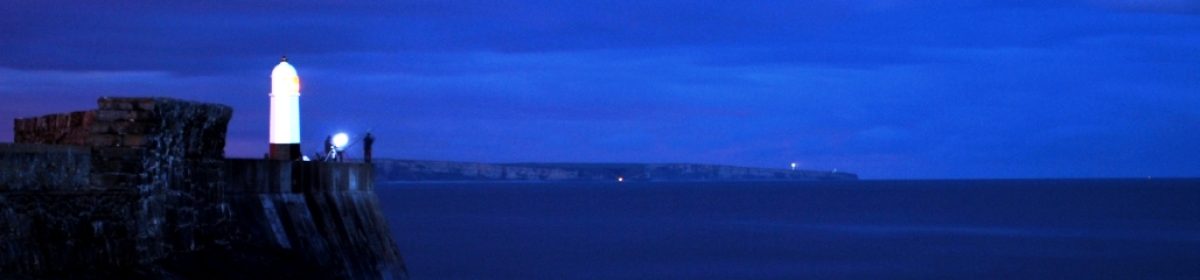
Porthcawl Beach

Rudyard Kipling’s poem, If, is a study in contrasts, considering many of the opposites that we encounter in daily life. He describes being able to do what others cannot; of handling situations with equanimity; of dealing with life in a balanced way.

Yet his comment, above, on the opposites, Triumph and Disaster, seems to add another dimension. Most versions of the poem capitalise the words as proper nouns, almost as if they are people, or even gods. And, in truth, many people see triumph as an idol to be worshipped at all costs.

Continue reading “The Imposters”

It’s Getting Up That Counts

Failure is successfully finding a way that does not work, and the only thing we can really control is the way we respond.

Disappointments happen; and we need to get used to it. We are going to have bad times as well as good; and the only thing we can really control is the way we respond.

When we fall, there is a temptation to think that we are failures. But that is not necessarily true. It has often been said that failure is successfully finding a way that does not work. That’s a good way to look at it. Psychologists call it reframing. It’s a matter of looking at things from a different perspective; changing the way we think about things; viewing failure as an opportunity to learn. It’s a matter of seeing the potential in each situation. As was once said, when you’re at the bottom, the only way is up.

Continue reading “It’s Getting Up That Counts”

Take a Deep Breath – It Will Improve Your Vision

Deep breathing has long been proven to be a fine method for calming the nerves.

A colleague once offered a very interesting observation on life. There are at least three sides to every story: There is your view, there is my view, and there is the truth, usually found somewhere in between.

I like the idea. Too many complications come from misunderstandings. People have been killed because of seeing things from different perspectives. So how can we simplify our lives in our interactions with other people?

Take a Deep Breath

Continue reading “Take a Deep Breath – It Will Improve Your Vision”