Let’s See How We Go

What’s a time you followed your gut and it turned out to be exactly right?
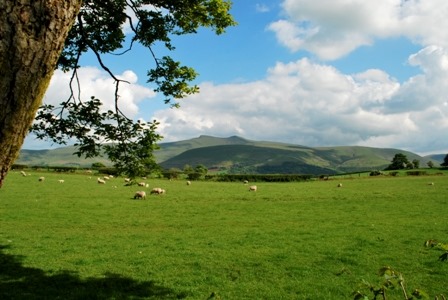
Pen y Fan

It was the end of our 37th wedding anniversary holiday when my wife  and I stopped at the Pont-ar-Daf car park at the foot of Pen y Fan in the Brecon Beacons for a rest after a long drive. We decided to stretch our legs a little with a stroll up the path leading to the summit. I had reached the top with a friend a few weeks earlier but my wife had never attempted it.

After a short walk, I asked my wife, who suffered from mild asthma, if she wanted to go back to the car. She asked me what the view was like from the ridge that we could see. I said it’s worth seeing and she said, “Let’s see how we go.”

We walked on steadily, one foot in front of the other, got to the ridge and, indeed, the view was worth the effort. I asked if she was ready to go back to the car and she asked which peak was Pen y Fan. When I pointed it out she said, “Let’s see how we go.”

We kept waking and reached the summit, with its view across the whole of South and Mid Wales just as everyone else was leaving. We were left alone at the top for about ten minutes. It was probably the most emotional experience of our lives together.

We took the required photos and just sat there, alone together, tears in our eyes from the waves of emotions. Getting to the top at the end of an anniversary holiday was well worth the effort. It was a shared experience that drew us even closer together than we had ever been before. And all because of her gut feeling, “Let’s see how we go.” It was the first and only time we ascended Pen y Fan despite living in its shadow for over 40 years together.

The following year, there was upheaval in the family. But that shared experience had given us the strength to keep going and just “see how we go,” one foot in front of the other, in the face of trials.

I rarely directly share personal experiences, but this one has kept me going despite everything that life has thrown at us.

Just over five years later, my wife’s asthma turned out to be lung cancer, and she passed away a few months before what would have been our 43rd anniversary. But that shared experience has kept me going, still dealing with the upheaval in the family, still putting one foot in front of the other, still telling myself, “Let’s see how we go.”
The Box

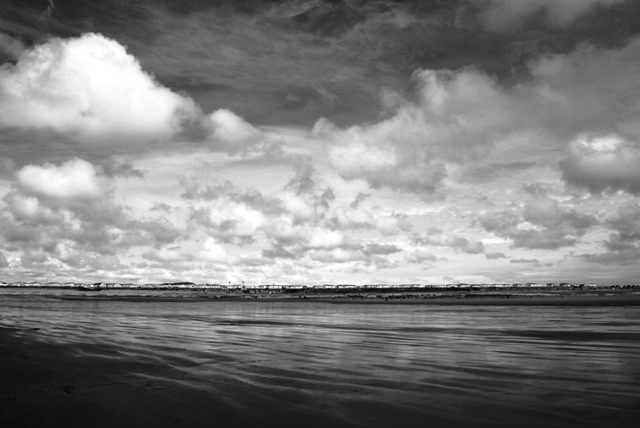
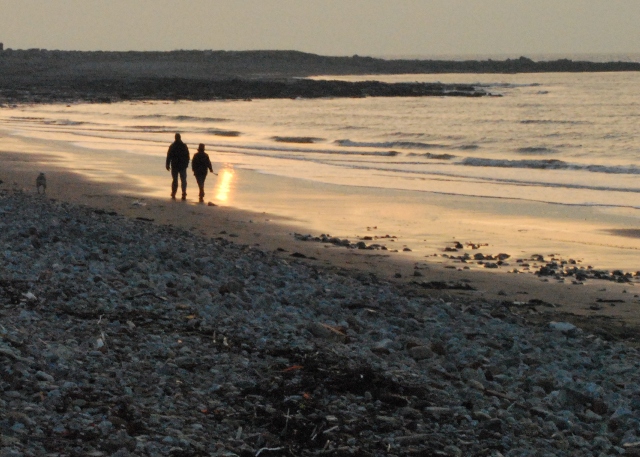
Couple Walking on Porthcawl Beach

Memories and feelings
All wrapped up in cotton wool
And bubble wrap;
Gently placed inside the box
With polystyrene pieces
And packs of desiccant;
Sealed and marked,
“Do not destroy,”
And archived.

For now, I have no need
Of memories or feelings;
Now that you’ve gone
And left me all alone
To face the bleakness of a future
Filled with sadness,
Filled with tears,
Filled with grief,
And uncertainty

Maybe, some day,
Our great grandchildren
Will look inside
To marvel at the love we shared.
“How quaint that they should be
Together, Oh so long!”
And give us pride of place
Upon their shelves
And mantels.

Or maybe you and I
Will reunite
To open up the box
And let the memories rekindle
The love that bound us
Together, forever;
To set the feelings free
To flood our hearts
And souls.

‘These three remain:
Faith, hope, and love;’
Anchors for this lonely soul
To which I cling with calloused hands
That long to feel
The softness of your cheeks.
Faith, hope, and love
That soon we’ll reunite
In Paradise.

There is a Way

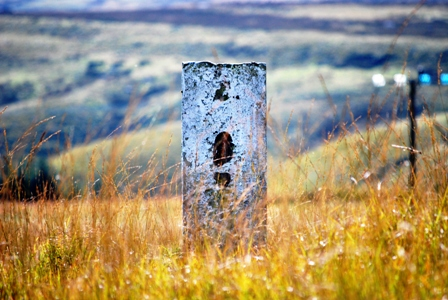
Way Marker, St. Illtyd’s Way, Aberdare

Grief can make you feel like all the roads are blocked, all the exits are barred. It can feel as if you have no direction, nowhere to go, nowhere to be but here, thinking of everything and thinking of nothing.

At such times, we need a way marker. We need a direction. We need to find a way through the barricades.

But only in our own time. When grief strikes, stop. Let it wash over you. Accept it for what it is. It’s an expression of love for the person we’ve lost. Take your time. Let no one rush you. Don’t kisten to those who would tell you that you should be over your grief, by now. There is no time limit.

Peace will come in your time, when you are ready.

Meanwhile, look for the signs. Look for the markers that say, “This is the way to your future.” They will appear. Sometimes, they’ve been there all along but our tears haven’t allowed us to see them. Sometimes they come along when we least expect it.

Eventually, though, we all have to make our own map. It’s not a map out of grief. It’s a map that acknowledges our grief, a map overlayed with grief. But like a landscape, shrouded in mist in which, little by little, the mist dissipates, very slowly, over time, as we keep putting one foot in front of the other, the grief, too, dissipates.

Maybe our grief will never go away. But it will fade, just enough for us to see the way forward.