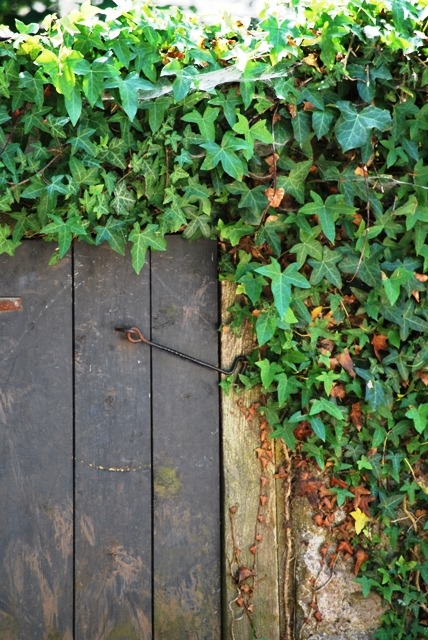
Old doorway now closed.
Ivied frame sealed shut with age.
It once was useful.
We were sitting at the picnic table, enjoying our lunch on a visit to the Museum of Welsh Life at St Fagans when I noticed this old doorway, surrounded by ivy. I was struck by the way the ivy frames the door, and the contrasts between the various colours and materials.
This open-air museum houses a number of old buildings which have been taken apart, stone by stone, piece by piece, timber by timber, and re-built to show what life was like in days gone by. There are also working sections, such as a blacksmith, a pottery where you can try your hand at the skill, an “olde shoppe” where you can buy snacks, and an old-time photographer’s studio where you can dress up in period costume, or wild west costume, and have your photo taken.
In an age when we have been trained to discard things very quickly and replace them with something new, would it not be good to remember that the discarded item was once useful, valuable, necessary, even. Often, when we make a new purchase, we praise it highly, boast about the “bargain” that we struck, and tell others that we don’t know how we ever managed without it. So what changed? Why is a perfectly useful item no longer necessary? Like this door, have we forgotten its value?
Having the best of life does not equate with having the latest of everything. More often, having the best is about being content with what we have, rather than always seeking something better. If we could become content with what we have, then maybe our resources, and those of everyone else, would last longer and go further. (And farther.)
So before you replace that apparently old item, ask yourself, “Why did I acquire this, in the first place? What attracted me to it? Why was it so precious?”
Then ask yourself, “What has changed? Why has it become valueless, now?”
In some cases, there is a genuine change. For example, it may be worn out or broken. And I’m certainly not advocating for filling our homes with junk. But in many cases, the change is only in our attitude.
Sadly, there are times when this attitude impacts on our relationships. We see family ties broken, simply because they are no longer valued; we see parents abandoned for the same reason; we see children abandoned because they require more maintenance than people are prepared to provide when the benefit is perceived to be less valuable than the cost.
These things, people, treasures, were once important. Maybe they still are.


